
Every booking channel brings guests in at a different cost. A walk-up at the gate, a booking on your website, a sale through a hotel concierge and a ticket sold by an OTA can all fill the same seat, yet each leaves a different amount in your business. Your channel mix is the blend of those sales, and over a season it shapes your margin more than almost any single price you set.
What OTAs and trade partners do well
OTAs earn their place through timing. Bookable Tourism, an Australian distribution advisory, explains in its guide to working with OTAs that these platforms market to travellers while they are still researching and planning, often before an itinerary is set. Later, they support in-destination booking on mobile, in the traveller's own language and often their own currency, with familiar payment methods and instant confirmation.
That kind of reach is hard to build alone, especially in international markets. The exposure your business receives via OTAs also tends to feed your direct channel. Bookable Tourism observes that many operators see direct bookings from free independent travellers (FIT) rise once they become visible on OTAs, because travellers research across several channels before they book.
Trade partners play a similar role closer to home. Inbound operators, hotel concierges and visitor centres recommend experiences to guests every day, and many of those guests would never search for you themselves.
Each channel earns its place in a different way. Here is how the main ones compare.
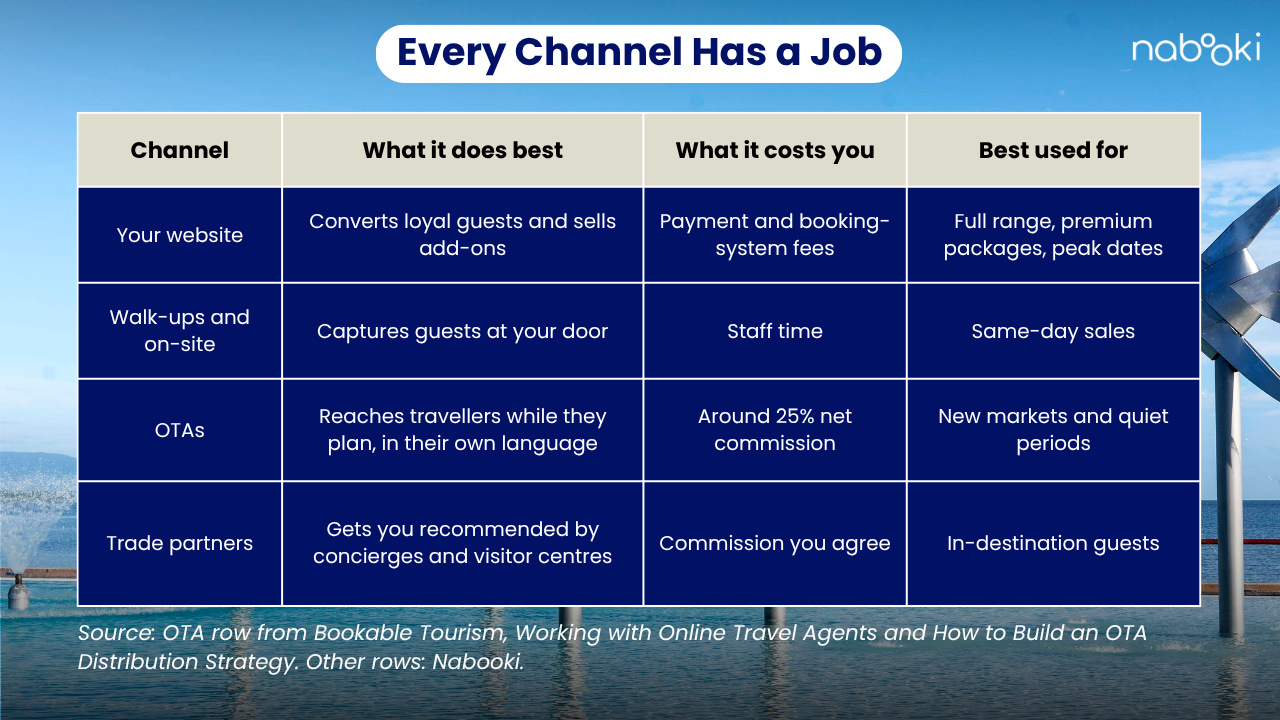
The right balance also depends on what you sell. Arival's 2026 study of Australian and New Zealand operators found tours are the most OTA-driven segment, with nearly 40 per cent of bookings coming through OTAs. Attractions, by contrast, still take roughly a third of their bookings through walk-ups. We unpack the wider findings in How ANZ Operators Are Driving Direct Bookings in 2026.
What they cost, and how to price for it
That reach comes at a price. In Australia, OTAs typically work on net rates, and Bookable Tourism puts the average commission at around 25 per cent net. The commission funds travel agent and affiliate payments, global marketing and platform visibility. It is also performance-based, so you only pay when a booking is confirmed, which makes it a marketing cost rather than a loss.
The catch is that the commission has to be priced in from the start. As Bookable Tourism puts it in its guide to building an OTA distribution strategy, "You should never 'lose' 25%, it should already be priced in." In practice, that means building your rack rate from your costs plus margin, then setting a net rate you are happy to accept from any reseller.
Here is an illustrative example with round numbers, where each guest costs $50 to host.
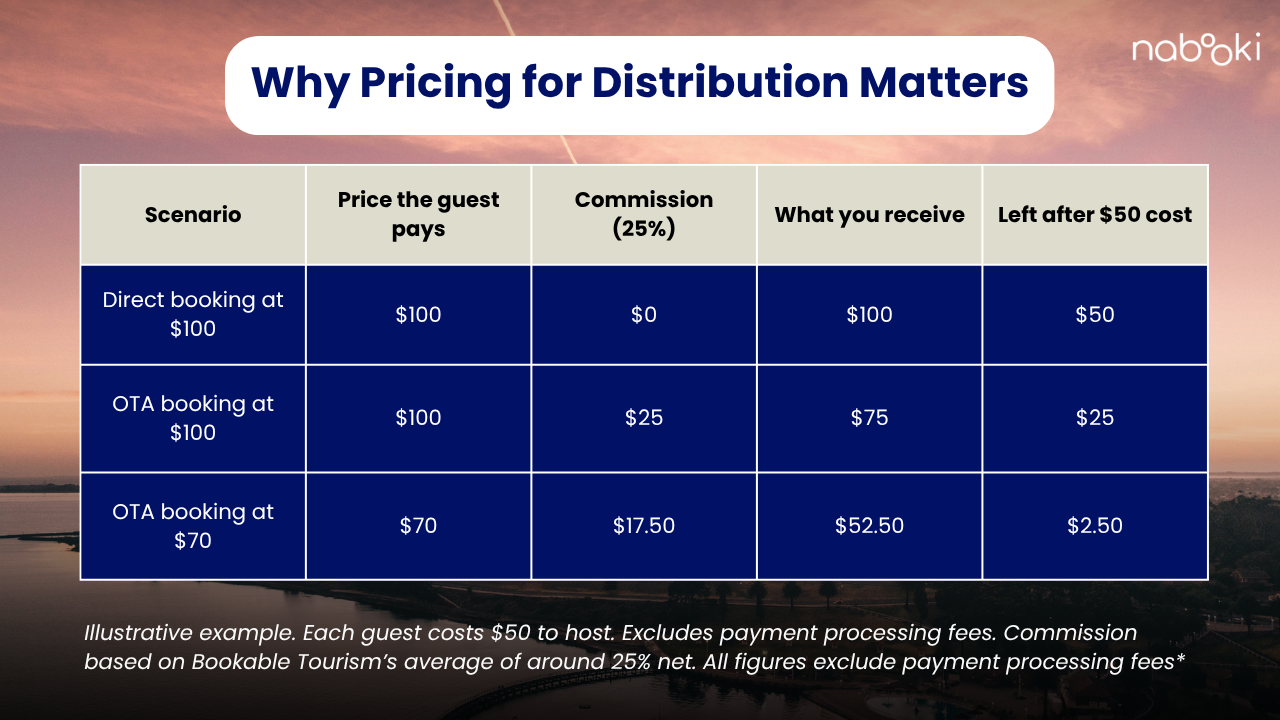
Priced correctly at $100, both channels make money, and direct stays your most profitable sale. Priced at $70 to look competitive, the OTA booking barely covers its costs. Bookable Tourism lists underpricing to win OTA visibility among the common mistakes it sees, and it is far harder to fix once your rates are live.
What to sell where
Once your pricing works across channels, the next decision is what each channel sells. Higher-cost channels suit a lead-in product, such as an entry-level tour or a general admission ticket, or a higher-margin product that can absorb the commission comfortably. Your premium packages and add-ons are better kept for your own website. Bookable Tourism recommends protecting the direct channel with consistent pricing and value-adds such as flexibility, inclusions and bundles, rather than discount wars.
Inventory matters just as much as product. Rather than releasing your full capacity, give each higher-cost channel a capped allocation, so there is always room for direct bookings. Bookable Tourism suggests OTAs work best for reaching new interstate and international demand and filling low or shoulder periods, not as a default channel you set and forget. The table below shows how a tour with 12 seats per departure might split its inventory.
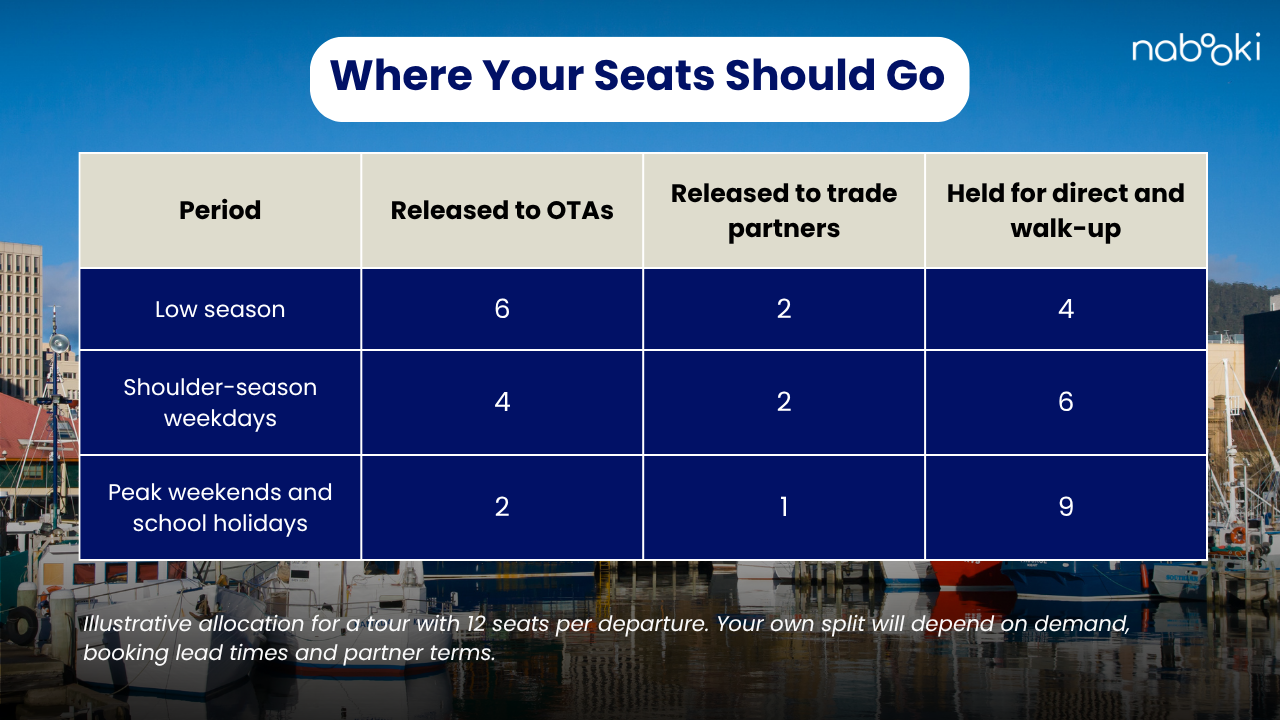
These allocations are illustrative. Your own split will depend on demand, booking lead times and the terms you agree with each partner.
For attractions, the same thinking applies to timed sessions. Release more OTA allocation into quieter sessions, such as weekday mornings or late afternoons, and hold popular sessions back for direct and walk-up guests. That way, OTA demand fills gaps rather than replacing sales you would have made anyway.
Working with trade partners
Not every partner connects to you through an API. Many local trade partners, such as hotel concierges, visitor centres and smaller inbound operators, simply need an easy way to check availability and confirm a booking. For these partners, the Nabooki agent portal is the best place to start.
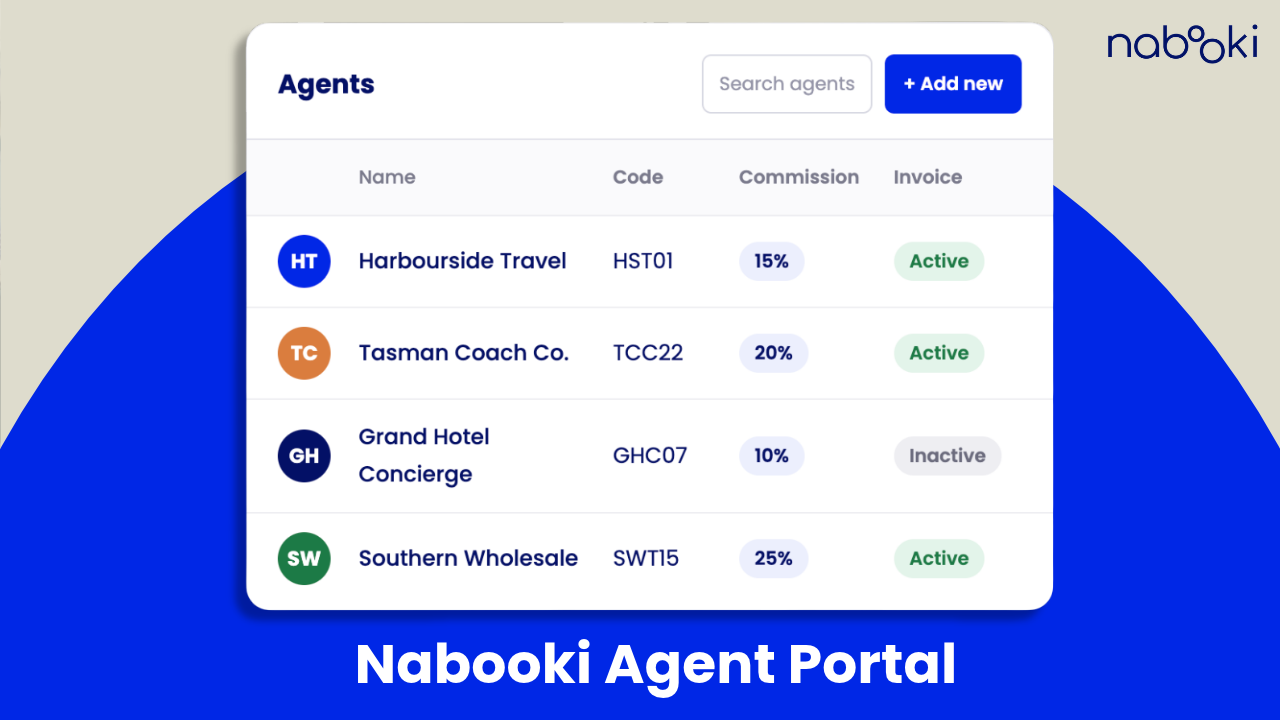
Each trusted partner gets a dedicated login to book your live inventory and earn a commission on what they sell. Commission splits are calculated automatically, so there are no spreadsheets to reconcile at the end of the month. Because you set the terms, it becomes a sales channel that works the way you want it to.
Keeping every channel in sync
Every extra channel adds another place where the same seat or ticket can be sold. Without connected systems, that risk grows with each partner you add. Bookable Tourism describes one attraction that was managing up to 13 OTAs by hand through their separate extranets. Bookings were missed, details had to be re-entered into the ticketing system, and sales cut-offs were extended to allow for the manual work. That last problem costs real revenue, because many travellers book on the day.
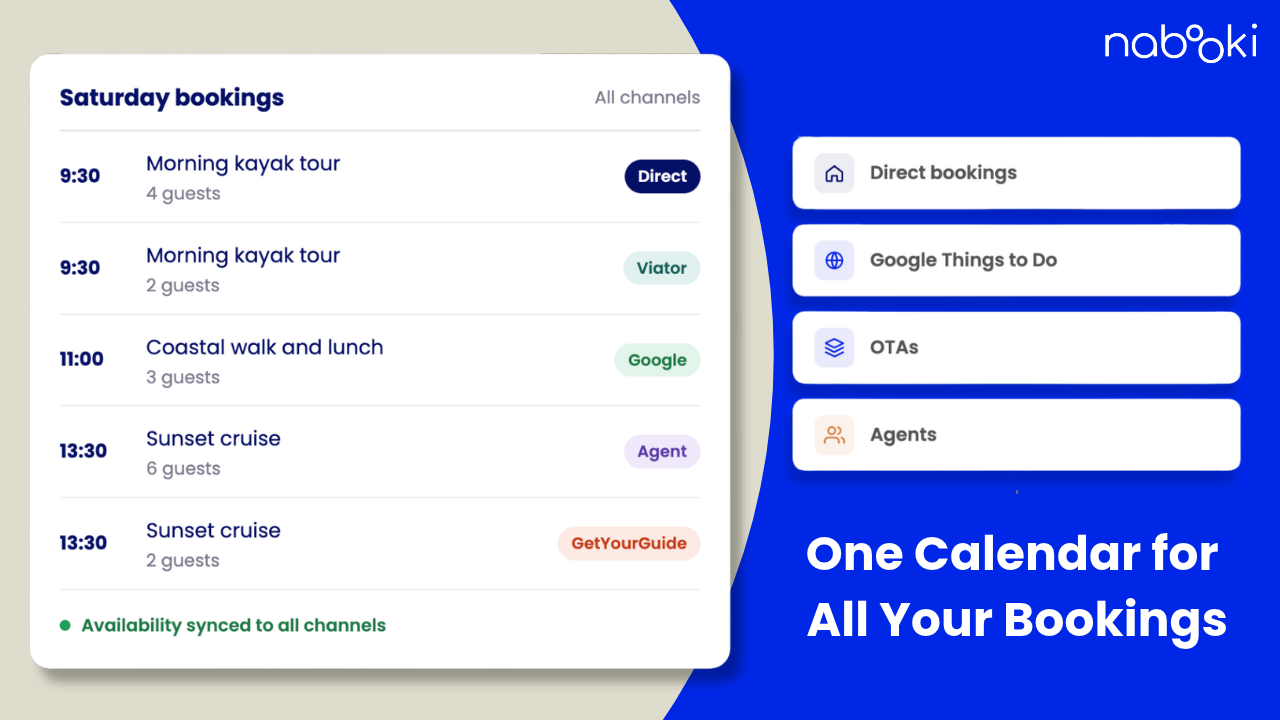
The answer is one shared inventory. When your OTAs connect to your booking system through a channel manager, a sale on any channel updates availability everywhere in real time. Nabooki brings those OTA bookings into the same live calendar as your direct sales, so your team works from one view instead of a dozen logins.
Review your mix every quarter
A channel mix is never finished. Bookable Tourism recommends reviewing OTA performance at least once a year, and ideally every quarter. Compare OTA contribution against direct bookings, check your margin by channel, and weigh the effort each channel takes against what it returns. Then rebalance, shifting allocation towards the channels that earn their keep.
Attractions should add two measures of their own. First, track FIT visits to see whether they lift as your OTA exposure grows. Second, if you run a free-entry site, review retail and food and beverage spend alongside visitation, since that is where a partner-driven visit pays off.
Finally, capture guest details wherever you can, whether at booking, at check-in or on site. A guest who first finds you through a partner is far more likely to come back direct if you can reach them after their visit.
What to do now
- Check your rack rates. Every product you list on a higher-cost channel should still clear your costs after a 25 per cent commission.
- Decide what goes where. Put lead-in or higher-margin products on OTAs, and keep premium packages and add-ons for your website.
- Set your allocations. Cap what each channel can sell, and hold back your busiest departures and sessions for direct and walk-up guests.
- Connect your channels. Use a channel manager so a sale on any channel updates availability everywhere.
- Bring local partners onto the agent portal. Give concierges and visitor centres their own login before signing them up anywhere else.
- Book a quarterly review. Compare margin by channel and direct share, then rebalance your allocations.
Getting the balance right
OTAs and trade partners will keep getting your experience discovered, and that reach is worth paying for. Get the pricing, product and inventory decisions right, and each channel will play its part while your own website remains your most profitable sale.
With Nabooki, you pay zero commissions on direct bookings. Start your free trial.
