.png)
Running an attraction on morning weather forecasts and guesswork is a fast way to burn through profit margins. Relying on walk-up arrivals means either paying staff to stand around on a dead Tuesday morning or facing a 45-minute gate queue on Saturday because the team was underbudgeted.

Reliable pre-booking data is much more than just sales insight. It's your daily operational blueprint. Modern attractions turn advance booking numbers into live data to lock in accurate staff rosters before the week begins and shift guest demand into quiet hours without blanket ticket discounts.
Eradicating Wage Waste with Advance Roster Control
Publishing rosters based on last year's averages forces venue managers into reactive and expensive decisions. Australian labor laws, such as the Amusement Award, generally require seven days' notice for staff rosters. Relying on last-minute schedule changes to handle unexpected walk-ups will easily trigger costly overtime and penalty rates. Instead of guessing weekend demand, operators using an online booking system for attractions can pull a live report on their 7-to-14-day pre-booking velocity to know exactly how many gate attendants and tour guides are actually needed.
.png)
The Kennedy Space Center Visitor Complex in Florida uses this exact foresight. By establishing mandatory timed departures through an attraction ticketing system, management tracks reservation velocity to coordinate their active fleet counts. Their official Visitor Guide details how internal bus tours depart in structured intervals, empowering operations teams to scale the number of active buses directly to confirmed guest arrival cohorts. This eliminates empty bus runs during slow windows and ensures the facility has enough drivers during peak exit times.
Similarly, The Louvre in Paris instituted strict 15-minute time-stamped entry reservations to manage its incredible visitor volume. The official Musée du Louvre ticketing platform notes that operations teams use this advance booking data to lock in security screeners and turnstile attendants based on hard entry quotas. Because reserved ticket holders are processed in specific time blocks, the museum's labor spend now directly matches confirmed visitor volume rather than erratic daily estimates.
Balancing Pre-Bookings with Walk-In Crowds
Not every attraction uses strict timed entries. Flexible venues like Taronga Zoo balance advance online pre-sales with traditional gate admissions. Their official ticketing page confirms guests can either book online or pay directly at the front desk upon arrival.

This hybrid model remains essential, as recent Arival research shows walk-ups still account for 28% of global attraction bookings. For these operators, pre-booking data acts as a predictive baseline. If advance sales show a 40% spike ahead of a holiday, teams can apply historical walk-in ratios to that guaranteed number. Securing a core percentage of attendees in advance shrinks the forecasting margin of error and ensures managers never run an under-staffed gate shift.
Shifting Demand into Quiet Hours
Every venue has slow windows. The immediate reaction is often to list tickets on high-commission deal sites. While this brings in a few extra bodies, it damages brand equity and surrenders massive revenue cuts to third-party distributors.
Instead, operators use timed slot management inside an embeddable booking widget for tours to gently guide guest behavior.

Victoria's Peninsula Hot Springs seamlessly balances pool capacity throughout the day by enforcing allocated arrival times. The venue's official FAQs strongly encourage visitors to secure a preferred entry window online in advance. To further shift demand, they promote specific early morning and twilight bathing windows. Price-sensitive visitor groups naturally self-select into these lower-density slots. This clears mid-day bottlenecks, preserves full-price peak ticketing margins, and gives groundskeepers clear schedule targets days in advance.
What the Guest Data Proves
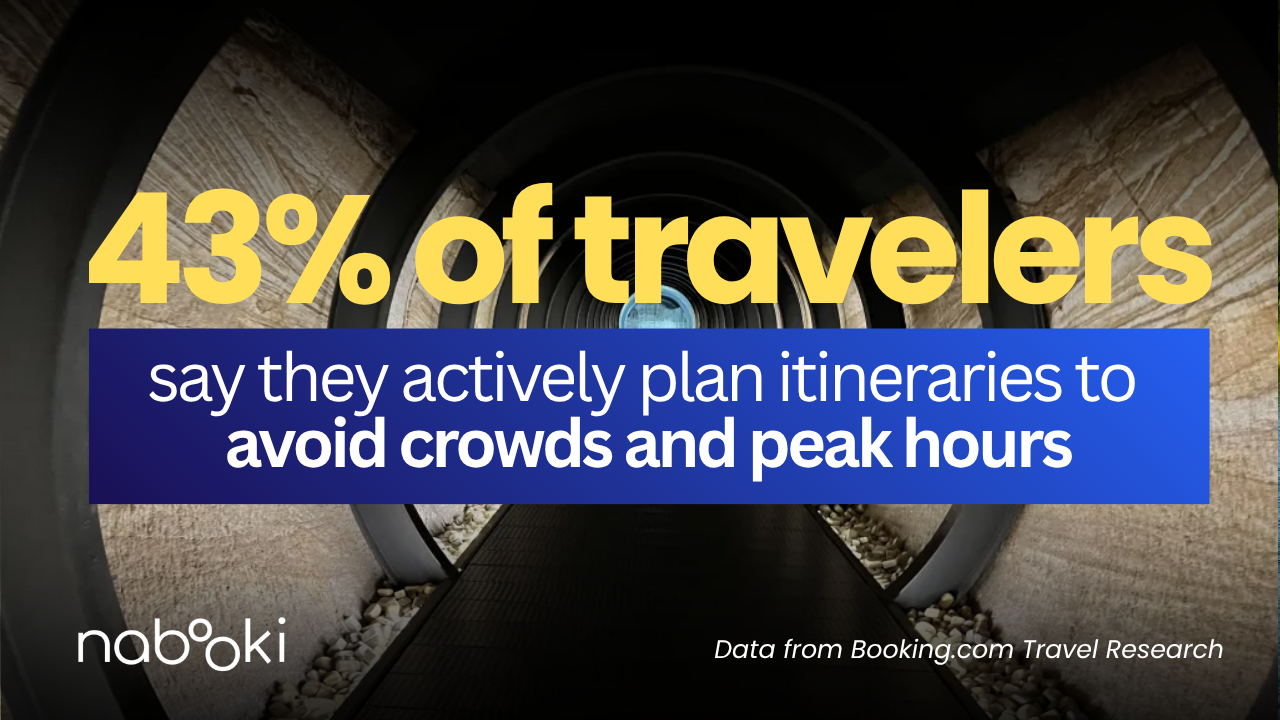
Recent 2026 industry research confirms that eliminating gate friction and streamlining digital checkouts are critical for securing advance sales and protecting venue margins.
- Capturing Spontaneous Demand: According to Booking.com's 2026 Travel Predictions, 67% of travelers now view life's spontaneity as a prime reason to book a trip. Accommodating these late-bookers requires real-time capacity management so venues can seamlessly process spontaneous walk-ups without overwhelming scheduled staff rosters.
- Securing Advance Data Velocity: According to Stripe's checkout statistics, travel cart abandonment averages 87.08% due to complex steps and hidden checkout fees. While new pricing regulations will outlaw hidden fees starting next year, operators should prepare now. Read how Australia's two price rules are changing to keep your checkout compliant and conversion-friendly.
- Capturing Off-Peak Demand: Booking.com's 2026 research also highlights a growing demand for solitude, with 43% of travelers actively seeking tranquil escapes to connect with nature and avoid the everyday hustle. Offering clear timed-entry options allows operators to guide this demographic away from daily bottlenecks and into quiet morning or late-afternoon slots.
Taking Control of Venue Margins
Upgrading your digital ticketing provides the operational clarity needed to run a tighter and more profitable venue. This is where a centralised system replaces legacy box office tools and fragmented spreadsheets.
Nabooki gives you complete ownership of your visitor data and granular control over arrival windows. Managers can review advance sales for specific time slots, roster exact gate staff, and dynamically adjust backend availability to prevent bottlenecks. At arrival, rapid QR code scanning processes tickets instantly to keep gate lines moving fast without extra labor.
By grounding roster decisions in precise timed-entry data, you eliminate daily chaos and protect operating margins. Feel free to contact us to see how Nabooki can streamline your venue's operations.
